

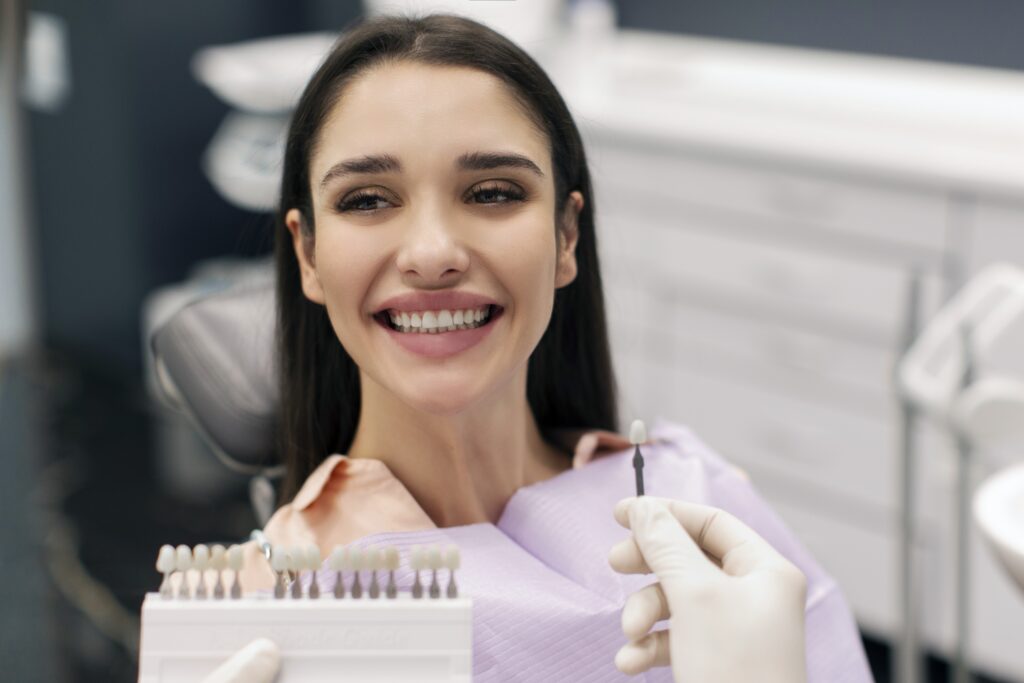



Why Consider Dental Veneers in Silsbee
Veneers give us a way to correct several cosmetic issues at once without reworking your entire mouth. Thin shells bond to the front of your teeth, covering discoloration that whitening can’t touch, closing small gaps, and evening out chips or uneven edges. For many patients, this means fewer separate treatments and a faster path to a smile they’re comfortable showing off. You can browse the full range of services we offer if you’re weighing veneers against other cosmetic options.
What to Expect During a Veneer Consultation
Your first visit is mostly a conversation. We ask what you’d like to see change, look closely at your bite and gum health, and talk through what’s realistic given your current teeth. From there, we map out a plan together. Questions we typically cover include:
- Which teeth are good candidates for veneers
- How much reshaping, if any, will your natural teeth need
- How long veneers tend to last, and what affects that timeline
By the end of the visit, you’ll know exactly what the process looks like for your specific case.
Porcelain and Composite Veneer Options
We work with both porcelain and composite materials, and each has its place depending on your goals and budget. Porcelain veneers resist staining well and reflect light in a way that closely mirrors natural enamel, which is why they’re often the choice for patients who want long-lasting, low-maintenance results. Composite veneers preserve more of your natural tooth and can sometimes be completed in fewer visits. During your consultation, we’ll explain which material fits your situation and, if cost is a factor, walk you through our payment plan options so there are no surprises. You can also read more about how porcelain veneers compare to other treatments under our broader cosmetic dentistry offerings.
The Veneer Process, Step by Step
Getting veneers isn’t a single appointment, but the process is straightforward once you know what’s ahead:
- Planning your new smile using photos and, when helpful, a preview of the final shape.
- Lightly reshaping the front surface of the tooth to make room for the veneer.
- Taking impressions or digital scans to guide fabrication.
- Fitting temporary veneers while your permanent ones are made.
- Bonding the final veneers and adjusting your bite for comfort.
Local anesthetic keeps the reshaping step comfortable, and we’ll talk you through what to expect at each stage so nothing catches you off guard.
Caring for Your New Veneers
Veneers are durable, but they still need the same attention you’d give your natural teeth, plus a little extra care around the edges:
- Brush twice daily with a non-abrasive toothpaste to protect the surface.
- Floss gently around the veneer margins to keep gums healthy.
- Skip using your teeth to open packages or bite down on ice.
If a veneer ever feels loose or you notice a chip, call our office so we can take a look before it becomes a bigger issue.
Is This the Right Choice for You
Veneers work best for patients with generally healthy teeth and gums who want to improve the appearance of their smile rather than fix structural problems. If you have active decay or a tooth that’s been significantly weakened, we’ll usually recommend addressing that first. Sometimes whitening or a bit of orthodontic work solves the issue more directly, and we’ll tell you if that’s the case rather than steering you toward veneers by default. That honesty is part of how we approach every consultation.
Schedule a Veneer Consultation at Silsbee Smiles
If you’re ready to talk through your options, reach out to our team via our contact page to schedule a visit. You can also get to know Dr. Danny Middleton before your appointment or find directions to our office if you’re new to the practice. We’ll sit down with you, answer your questions, and figure out together whether veneers are the right next move for your smile.